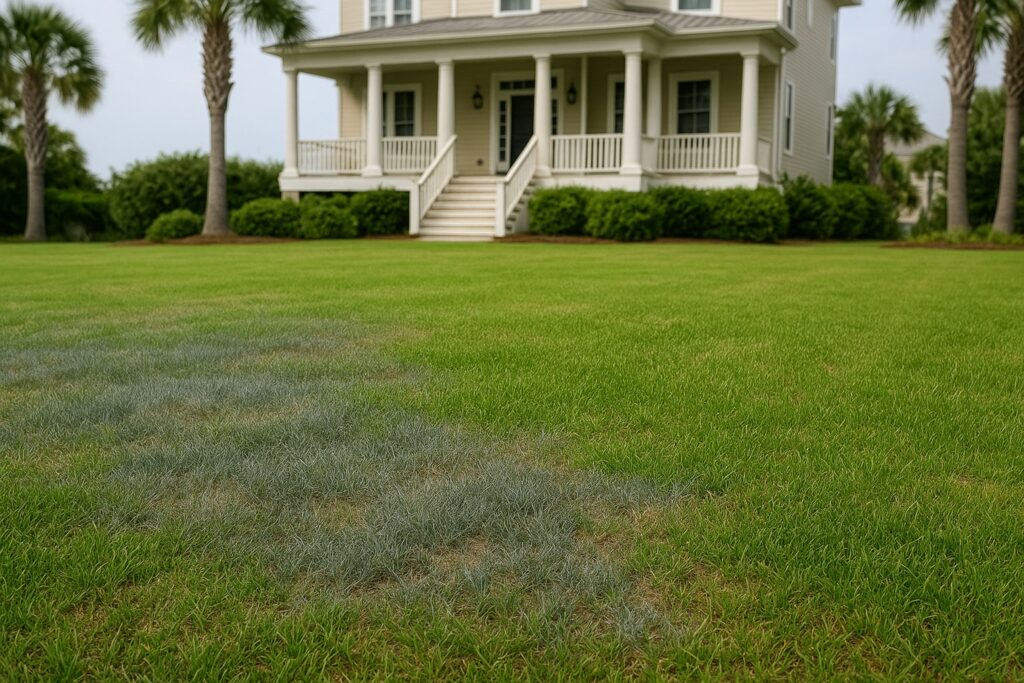
Lawns don’t turn brown overnight. The warning signs are always there—subtle changes in color, texture, or growth that tell you something is wrong. In North Myrtle Beach, where sandy soils drain quickly and coastal weather adds stress, catching these signs early is the difference between a quick fix and a full lawn recovery. At KeckCo Turf & Ornamental Services, we’ve seen how paying attention to the early whispers of trouble saves homeowners time, money, and frustration.
Signs of Drought Stress
When water is scarce, your lawn speaks up.
- Color Shift: Grass that once looked vibrant green takes on a bluish-gray tint. This is the turf’s first SOS before it turns brown.
- Footprints That Stay: Walk across your lawn. If your footprints linger and the blades don’t bounce back, the grass is already wilting from lack of water.
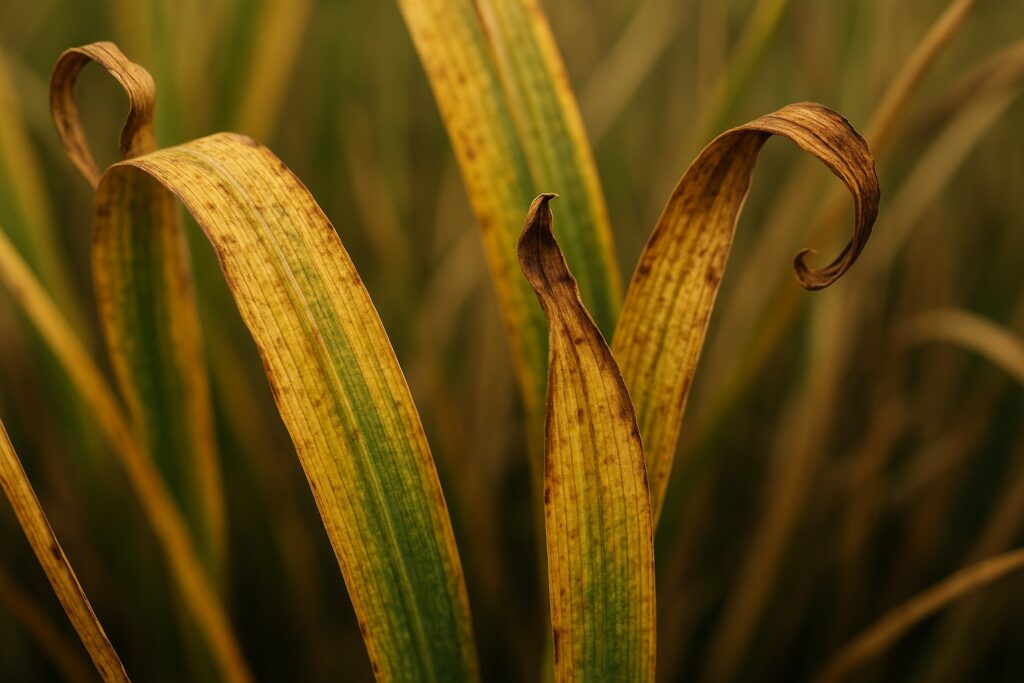
- Crisp or Rolled Blades: In severe stress, grass blades curl inward or feel crunchy to the touch.
What to Do: Water deeply and early in the morning, giving your lawn about one inch per week (including rainfall). Avoid frequent shallow watering, which keeps roots weak.
Signs of Pest Stress
Insects love weakened lawns and often show up before you notice.
- Irregular Patches: Chinch bugs, grubs, and mole crickets leave uneven patches that don’t respond to watering.
- Loose Sod: If the grass peels back easily like carpet, grubs may be feeding on roots beneath the surface.
- Increased Bird or Animal Activity: Birds, raccoons, or moles digging in your lawn are often hunting for pests below.
What to Do: Check soil and grass roots for visible insects or damage. Call a professional to confirm the pest type and apply targeted treatments—over-the-counter sprays often miss the mark.
Signs of Nutrient Stress
When soil can’t supply what grass needs, the lawn shows it.
- Yellowing Grass: A classic sign of nitrogen deficiency, especially if older blades turn yellow while new growth stays light green.
- Purple or Red Tint: Phosphorus deficiency often reveals itself in stressed, discolored patches.
- Slow Growth: If your lawn barely grows between mowings, it may be starved of nutrients.
What to Do: Get a soil test before applying fertilizer. Adding the wrong nutrients can do more harm than good. Balanced fertilization, based on science not guesswork, strengthens turf and prevents long-term issues.

Stress Multipliers
Sometimes one stress invites another. A drought-stressed lawn is more likely to develop chinch bug damage. A nutrient-poor lawn is more prone to fungus. That’s why early detection matters—problems compound quickly if ignored.
Trust Local Experts for Early Detection
Catching lawn stress early saves money, time, and turf. At KeckCo Turf & Ornamental Services, we know the local soil, weather, and pests, and we can diagnose problems before they spread. Call 843-273-0735 or visit keckcoturf.com for a lawn inspection today.