At sunrise in North Myrtle Beach, the breeze carries salt and birdsong. A yard wakes up: bees clock in on purple blooms, a drip line whispers at the roots, and last night’s storm sits calmly in a tidy rain garden instead of rushing down the driveway. Nothing flashy—just a quiet landscape that spends less, wastes less, and gives more back. That’s eco-friendly design done right: beautiful on the surface, smart underneath.
Here’s how to build a coastal-tough, low-maintenance yard that looks great in every season—and works with nature, not against it.
Plant with the Coast, Not Against It
Choose plants that love our sun, wind, and occasional salt spray. Coastal-tough evergreens and grasses set the backbone; long-blooming perennials bring color in waves. Native and well-adapted species stay healthier with less water and fewer chemicals, which means less work for you and a better buffet for local pollinators.
Water Less, Thrive More
Deep, infrequent watering grows deep roots. Pair that habit with drip irrigation in beds and a smart controller that adjusts to weather. You’ll cut waste, reduce disease on leaves, and keep moisture exactly where plants need it—the root zone.
Feed the Soil, Not Just the Plants
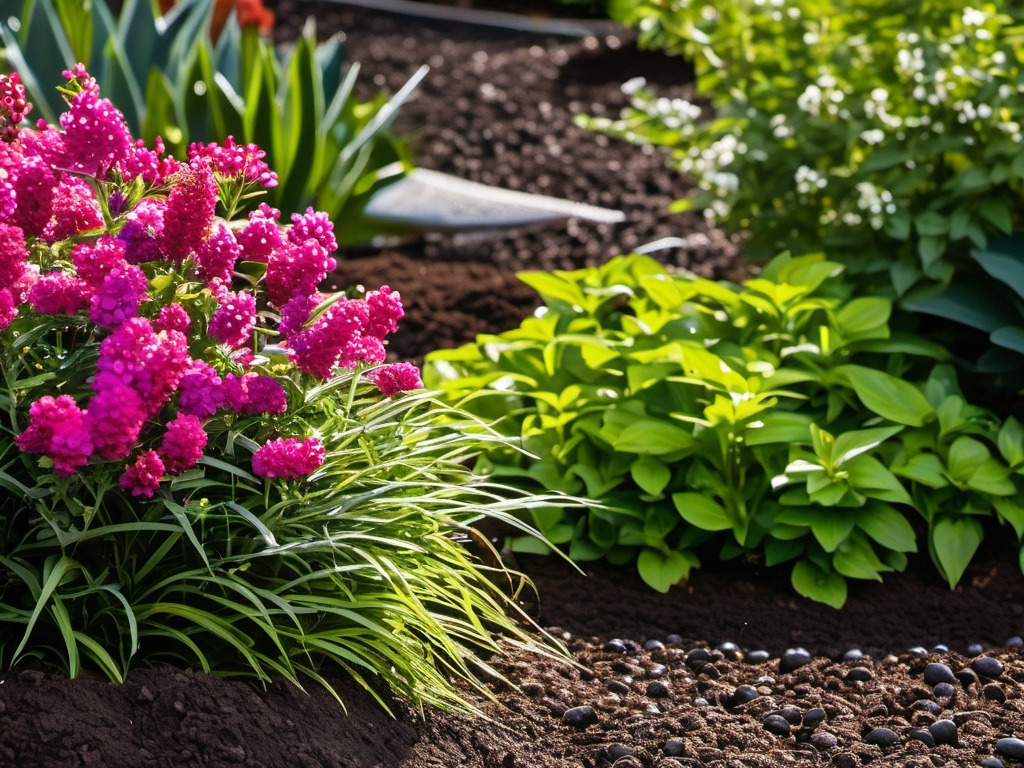
Healthy soil is a living thing. Top your beds with 2–3 inches of mulch to lock in moisture and block weeds. Add finished compost in spring and fall to boost organic matter. When soil biology is strong, plants are stronger too—and you need less fertilizer to keep them happy.
Invite Pollinators (They’ll Work for You)
Layer blooms from early spring to late fall so bees and butterflies always have a reason to visit. Skip broad-spectrum sprays; spot-treat only when needed. The payoff is real: more pollinators, more blooms, fewer pests getting the upper hand.
Right-Size the Lawn
Turf is great for play and pathways—but it’s thirsty. Keep a purposeful patch of warm-season grass and surround it with beds, groundcovers, and ornamental grasses that handle heat and use less water. Your weekends (and water bill) will thank you.
Capture the Rain
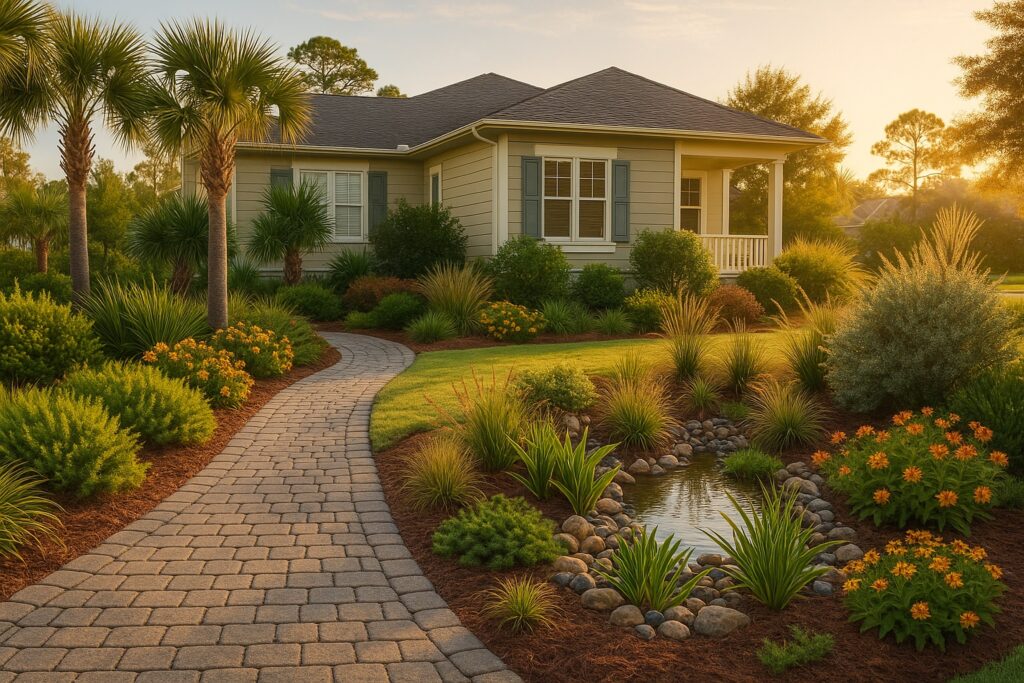
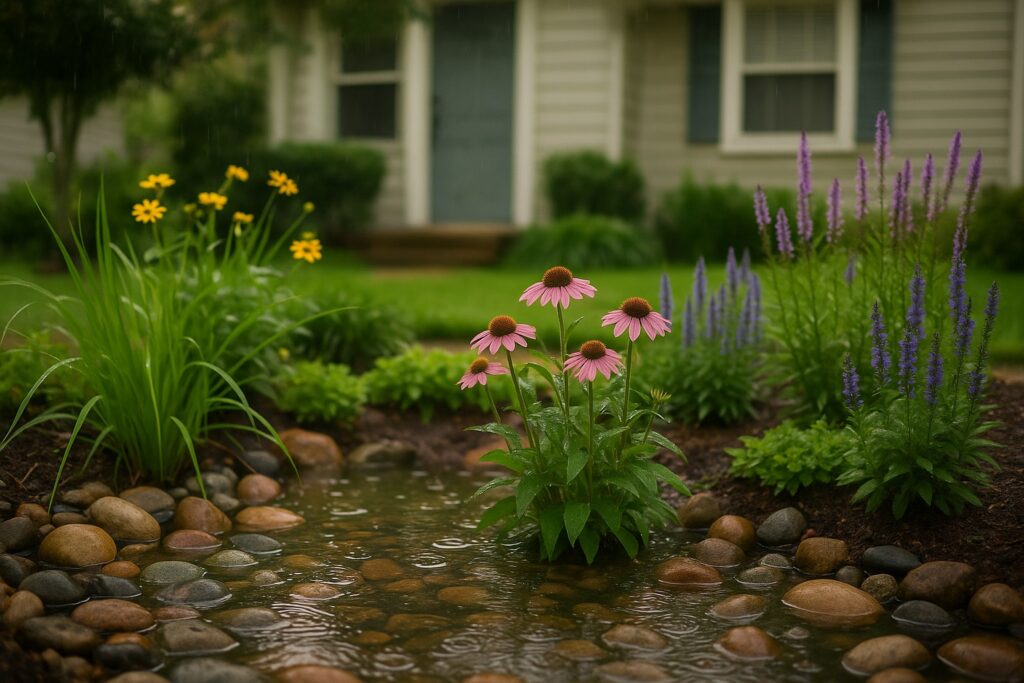
Let storms help you. A modest rain garden along a downspout or shallow swale in a low spot slows runoff, soaks water into the soil, and protects foundations. Add moisture-loving plants for a feature that looks good and earns its keep.
Hardscapes That Breathe
Choose permeable pavers or gravel for paths and sitting areas. They drain quickly after coastal downpours and keep heat down around the house. Pair them with clean edging so mulch stays put and the design reads tidy from the street.
Pest Control with a Lighter Touch
Start with Integrated Pest Management (IPM): scout regularly, identify accurately, and treat precisely. Improve airflow with smart pruning, water at dawn, and keep blades sharp—most fungal and insect issues shrink when the basics are right.
Simple Wins This Weekend
Edge beds cleanly, top up mulch, move a hose to test drainage and spot where a rain garden could live, swap a thirstier shrub for a coastal-tough evergreen, and set your controller to water before sunrise. Small moves, big impact.
Coastal Beauty, Smaller Footprint
An eco-friendly landscape isn’t a compromise—it’s an upgrade. It’s cooler roots in August, flowers that don’t quit, pathways that dry after storms, and a yard that feels like it belongs here. Build it once, enjoy it for years.
Let’s Make Your Yard Work With Nature
KeckCo Turf & Ornamental Services designs, installs, and maintains eco-friendly landscapes tuned to North Myrtle Beach—native-forward plantings, smart watering, rain solutions, and year-round care. Call 843-273-0735 or visit keckcoturf.com to schedule a design walk-through.