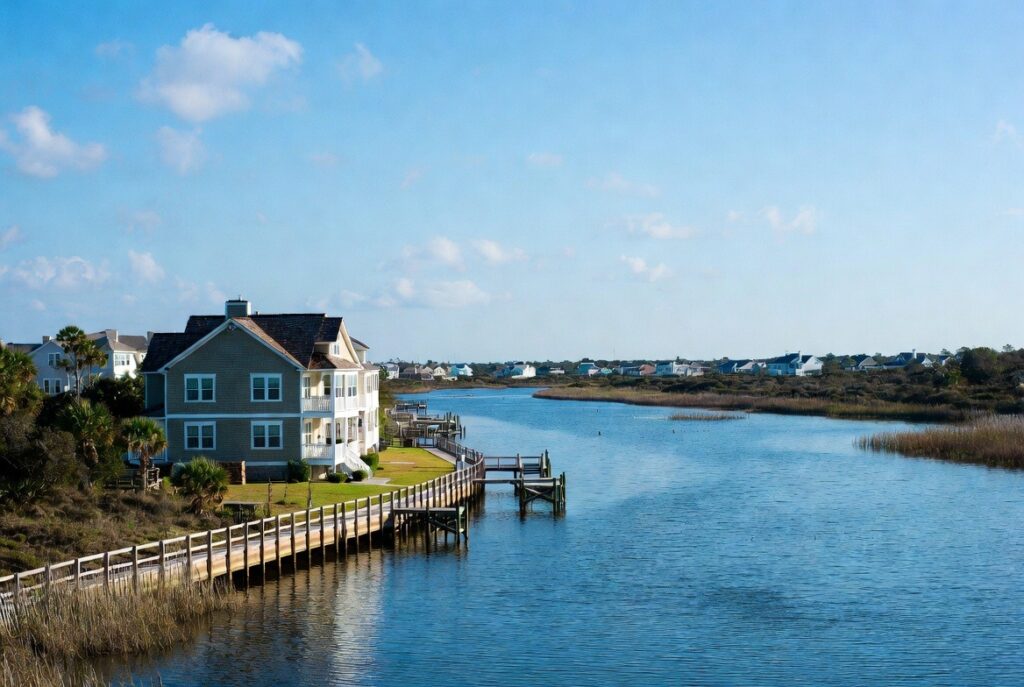
If you’ve lived in North Myrtle Beach long enough, you know the wind is more than a breeze—it’s a constant presence. Some days it’s gentle and cooling. Other days it’s relentless, drying out soil, bending plants, and quietly reshaping your yard over time. Coastal winds influence far more than comfort; they affect how plants grow, how moisture behaves, and how long a landscape truly lasts.
The good news? Wind doesn’t have to be the enemy. When understood and designed for properly, it becomes part of a stronger, more resilient landscape. At KeckCo Turf and Ornamental Services, we design with coastal wind in mind—so your yard works with nature, not against it.
Why Wind Matters More Than You Think
Wind impacts your landscape every single day, even when it isn’t obvious. Over time, unmanaged exposure leads to:
- Dry, stressed turf
- Burned or tattered leaves
- Leaning or shallow-rooted plants
- Soil erosion
- Increased irrigation demands
Unlike pests or storms, wind damage is gradual. Many homeowners don’t notice the cause—only the decline.
Understanding Wind Patterns in Coastal Carolina
Coastal wind isn’t random. In North Myrtle Beach, prevailing winds typically come from the ocean and shift seasonally. Winter winds tend to be colder and drier, while summer winds combine heat and humidity.
These patterns create microclimates in your yard:
- Windward sides that dry quickly
- Sheltered zones that retain moisture
- Areas where plants struggle year after year
Recognizing these zones is the first step toward smarter landscape design.
How Wind Affects Turf Health
Grass may seem resilient, but constant wind exposure causes hidden stress.
Wind:
- Accelerates evaporation
- Dries soil unevenly
- Weakens root development
- Increases salt exposure near the coast
This is why some lawns appear green in patches and thin in others—even with consistent watering.
Solution: Turf selection, proper mowing height, soil conditioning, and wind-buffering plantings all work together to stabilize lawn health.
Choosing Wind-Resistant Plants
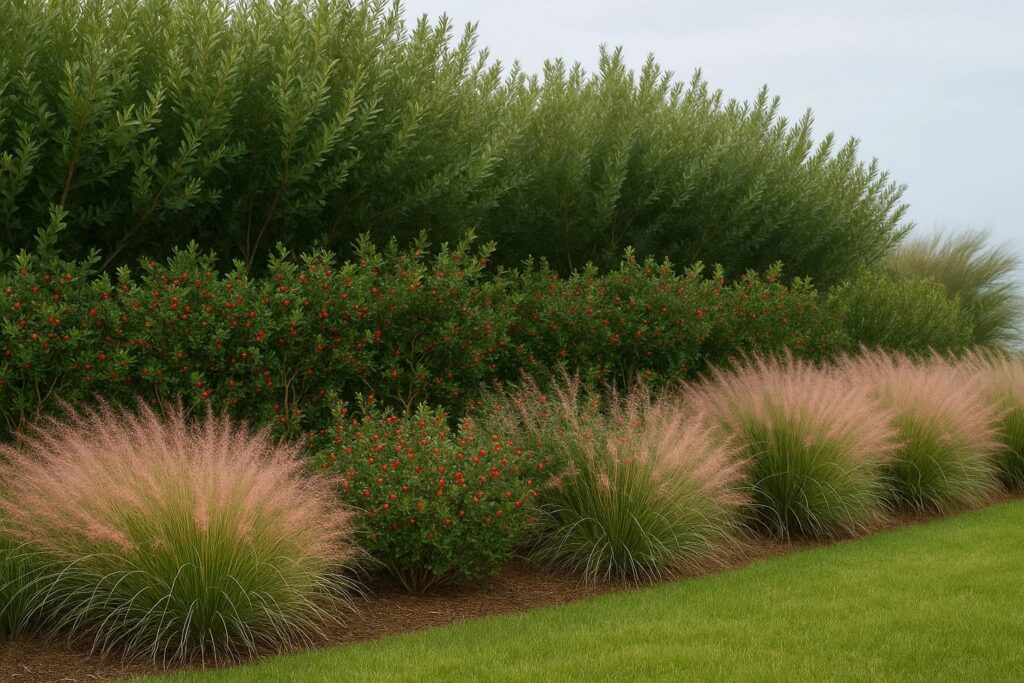
Not all plants handle wind the same way. Coastal landscapes thrive when plants are selected for flexibility, root strength, and salt tolerance.
Wind-resilient favorites include:
- Wax myrtle
- Yaupon holly
- Juniper varieties
- Muhly grass
- Sea oats
- Oleander (in protected areas)
These plants bend rather than break, anchor soil, and protect more delicate plantings behind them.
Using Plant Layers to Block and Filter Wind
One of the biggest mistakes homeowners make is trying to stop wind completely. Solid barriers often fail—or cause worse turbulence.
Instead, effective landscapes filter wind gradually using layers:
- Taller shrubs or trees as the first line
- Medium-height ornamentals behind them
- Groundcovers to stabilize soil
This layered approach reduces wind speed without creating damaging pressure zones.
Windbreaks That Look Natural
Windbreaks don’t need to look like walls. Thoughtfully designed plantings create protection while maintaining beauty.
Natural windbreaks:
- Improve privacy
- Reduce noise
- Create sheltered outdoor spaces
- Protect turf and flower beds
When placed correctly, they become design features—not defensive structures.

Protecting Soil From Wind Erosion
Wind doesn’t just dry plants—it moves soil. Sandy coastal soils are especially vulnerable.
Prevent erosion by:
- Maintaining mulch coverage
- Using groundcovers in exposed areas
- Avoiding bare soil
- Improving soil organic matter
Healthy soil stays where it belongs and supports deeper root growth.
Designing Outdoor Living Spaces With Wind in Mind
Outdoor spaces are more enjoyable when they’re sheltered.
Strategic placement of:
- Plant screens
- Pergolas
- Seating areas
- Lighting
creates comfort without blocking views or airflow completely. A well-designed yard offers both openness and refuge.
Working With Nature Creates Stronger Landscapes
Coastal wind isn’t something to fight—it’s something to design for. Landscapes that respect local conditions last longer, need less maintenance, and look better year-round.
When plants are chosen wisely and placed intentionally, wind becomes part of the landscape’s rhythm—not a constant problem.
Let KeckCo Turf & Ornamental Services Design for Coastal Conditions
If parts of your yard struggle year after year, wind exposure may be the reason. At KeckCo Turf and Ornamental Services, we design landscapes specifically for coastal Carolina conditions—wind included.
📞 Call 843-273-0735
🌐 Visit https://keckcoturf.com/
Let’s build a landscape that stands strong, season after season.