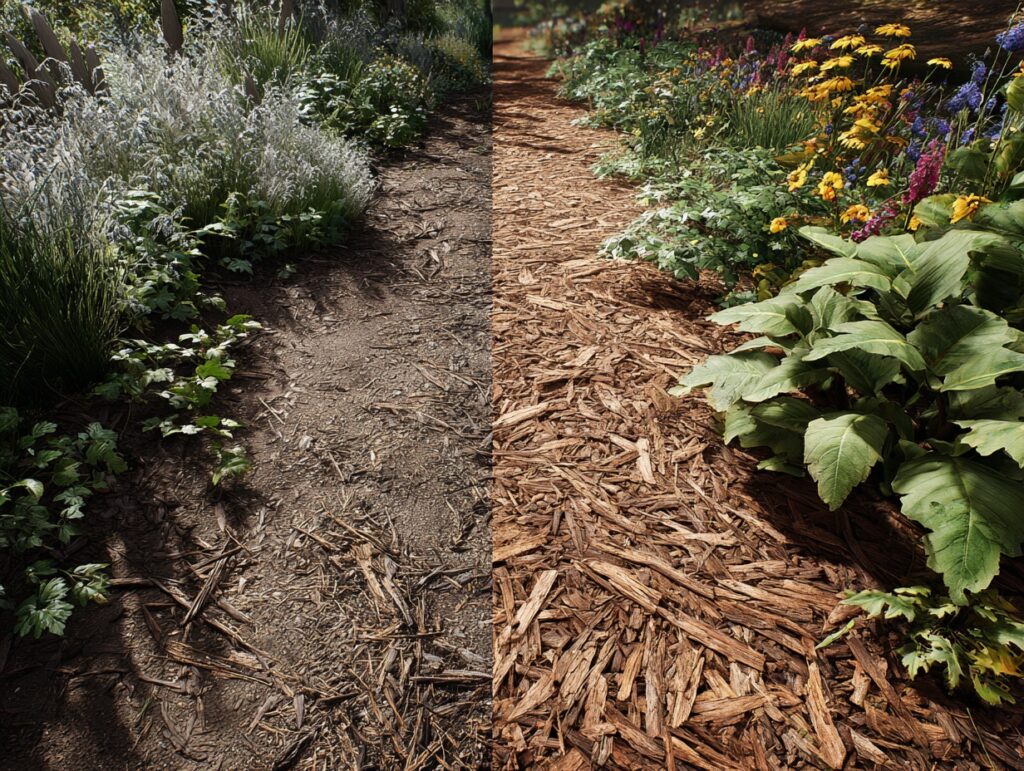
The morning after a summer storm in North Myrtle Beach, two yards tell two stories. One bed is muddy, plants slumped, weeds cocky as ever. Next door, the beds wear a neat, cinnamon-brown blanket; rain stayed put, roots stayed cool, and the blooms look like they slept well. That blanket is mulch—and around here, it’s the difference between fighting your landscape and enjoying it.
At KeckCo Turf & Ornamental Services, we’ve watched mulch rescue tired beds, protect young shrubs, and keep soil alive through our heat and sudden downpours. Here’s the simple, local way to do it right.
What Mulch Actually Does (More Than You Think)
Mulch is your plants’ bodyguard and butler. It:
- Holds moisture, stretching time between waterings.
- Shades roots and tempers soil temps, crucial in SC summers.
- Blocks weeds by denying light to seeds.
- Prevents erosion when storms unload.
- Feeds the soil as organic mulches break down, inviting earthworms and beneficial microbes.
Do those five jobs consistently and your ornamentals will repay you with steadier growth, fewer pests, and better color.
Picking the Right Mulch for South Carolina Beds
Not all mulch wears the same uniform. Choose what fits your plants, slope, and style.
- Pine Straw
A coastal favorite. Light to carry, locks together on slopes, and suits azalea, camellia, and other acid-lovers. Color softens with time; plan to top off 1–2 times a year. - Shredded Hardwood
The classic look. Breaks down at a steady pace to feed soil life. Stays put in heavy rain better than large nuggets. - Pine Bark Nuggets
Handsome texture, longer-lasting, but can float in downpours or wash from steep beds. Best for flatter areas with good edging. - Dyed Mulch (Brown/Black)
Sharp contrast and curb appeal. Pick premium, non-toxic dyes and avoid piling against white concrete where color can rub when fresh. Expect faster fade in full sun. - Rock or Rubber
Low maintenance, but they hold heat and don’t feed soil. Useful for drainage strips, play zones, or spots where plants aren’t rooting deeply—not ideal around shrubs or trees.
Pro tip: Match mulch to plant style. Fine leaves (boxwood, azalea) look tidy with shredded textures; bold leaves (cast iron plant, magnolia) pair well with nuggets or straw.

How Much, How Deep, and How to Lay It (The KeckCo Method)
- Depth: Aim for 2–3 inches settled depth. Thin won’t stop weeds; thick can suffocate roots.
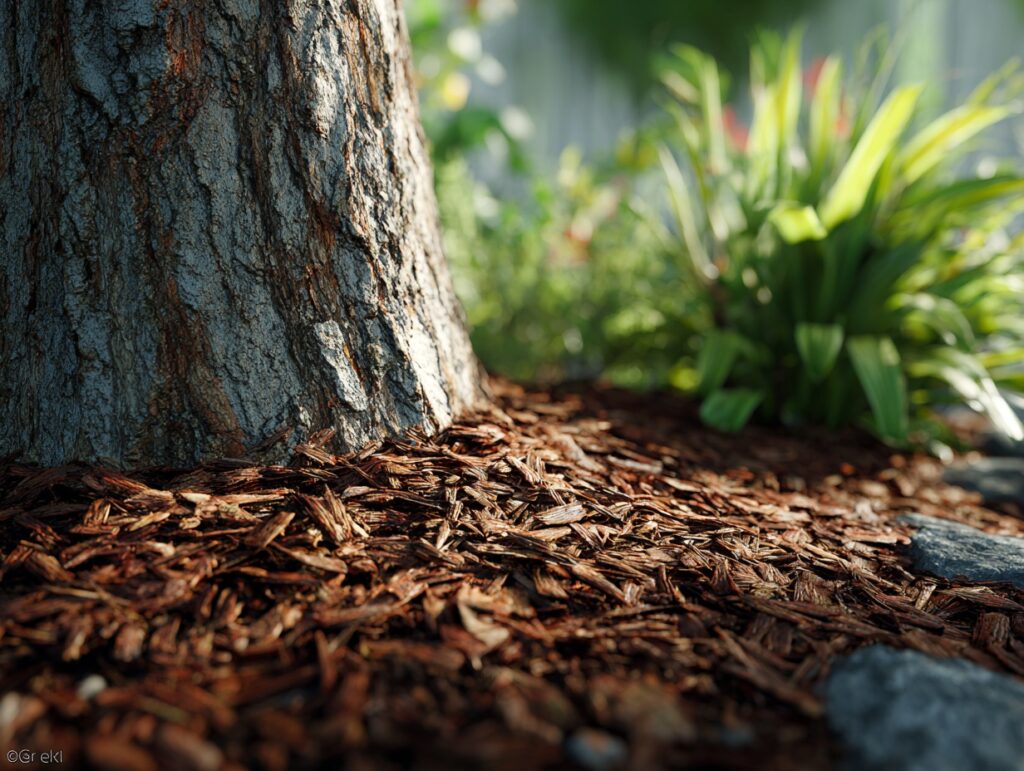
- Keep trunks clear: Make a mulch donut, not a volcano—leave 3–6 inches of bare space around shrub stems and the visible root flare of trees.
- Edge first: Cut a crisp bed edge so mulch doesn’t creep into turf.
- Water, then mulch: Lightly water beds first, spread mulch evenly, then mist to settle.
- Perennials: Keep mulch off crowns to prevent rot; tuck it around, not over, emerging shoots.
Quick math for ordering:
Cubic yards = (Bed length ft × width ft × depth in) ÷ 324
(1 cubic yard = 27 cu ft ≈ 13.5 bags of 2 cu ft, or 9 bags of 3 cu ft)
When to Mulch (And When to Refresh)
- Spring: Full refresh after pruning and pre-emergent—we start the season tidy.
- Fall: Top off thin spots to buffer winter swings and hold fall moisture.
- After big storms or installs: Patch washouts and lock in new plantings.
If you can see bare soil—or you pull a handful and it’s under 2 inches—it’s time.
Pests, Termites & Other Worries (Plain Talk)
Mulch itself doesn’t “cause” termites, but thick, damp layers against siding invite trouble. Keep 6–12 inches of clear space near foundations, never pile mulch up the wall, and store fresh mulch away from the house. Break up matted layers seasonally so water can pass through and the surface can dry.
Common Mulch Mistakes (And Easy Fixes)
- Volcano mulching trees: Burying the trunk = rot and girdling roots. Always reveal the root flare.
- Fresh wood chips stealing nitrogen: A thin compost dusting beneath chips solves surface nitrogen tie-up in annual beds.
- Wrong texture on steep slopes: Go pine straw or shredded hardwood to resist washouts.
- Old, crusted mulch: Fluff or rake before topping so new layers knit with old and water infiltrates.
A North Myrtle Beach Backyard, Before and After
One of our homeowners called mid-July: beds flat, hydrangeas sulking, irrigation running daily. We edged, relieved compaction around shrubs, laid 2.5″ shredded hardwood, and adjusted watering to deeper, less frequent cycles. Two weeks later the soil stayed cool to the touch by mid-afternoon; blooms perked up, and the weeds quit picking fights. Same plants, different story—thanks to that simple brown blanket.
The Takeaway for Your Yard
Mulch is quiet work that pays loud dividends: fewer weeds, steadier moisture, happier roots, and rich, living soil. Choose the right material, lay the right depth, and keep it off trunks—you’ll spend less time fixing problems and more time enjoying your porch.
Make Mulch Work for You (Without the Mess)
Want beds that look great and stay that way? KeckCo Turf & Ornamental Services can edge, prep, and mulch your property the Carolina way—and fold it into a year-round plan. Call 843-273-0735 or visit keckcoturf.com to schedule service.